


 English

Introduction
As industries move toward smarter automation and energy-efficient equipment, Brushless Motors have become the preferred choice for engineers and manufacturers worldwide. Their high efficiency, long service life, and precise electronic control make them ideal for applications ranging from hobby-grade RC vehicles to advanced industrial automation.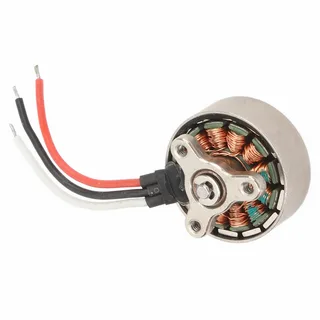
Whether you're designing a brushless motor RC car, building a robotic system, or selecting a 24V Brushless Dc Motor for factory equipment, understanding how brushless motors work can help you make the right decision.
What Makes a Brushless Motor Different?
Unlike traditional brushed motors, a brushless motor replaces mechanical brushes with an electronic controller. Instead of relying on physical contact to switch current, electronic commutation precisely controls the magnetic field inside the motor.
This design provides several significant advantages:
Longer operating lifespan
Higher energy efficiency
Lower maintenance costs
Reduced electrical noise
Better heat dissipation
More stable high-speed operation
Because there are no brushes to wear out, brushless motors can operate continuously for thousands of hours with minimal maintenance.
RC Brushless Motor and ESC: A Perfect Combination
One of the most common applications is the RC brushless motor and ESC system.
The ESC (Electronic Speed Controller) is responsible for controlling motor speed, acceleration, braking, and direction. Together, the motor and ESC create a highly responsive power system capable of delivering impressive acceleration and efficiency.
Advantages include:
Faster Acceleration
Brushless motors produce higher rotational speeds than brushed motors, allowing RC cars, boats, and drones to reach impressive performance levels.
Longer Battery Life
Higher efficiency means less power is wasted as heat, allowing batteries to last longer between charges.
Reliable Performance
Since there are no brushes to replace, RC enthusiasts spend less time on maintenance and more time enjoying their vehicles.
Today, almost every high-performance brushless motor RC car uses a brushless motor paired with a compatible ESC for maximum power and control.
Why Micro Brushless Motors Are Growing in Demand
Miniaturization is transforming many industries, increasing the demand for compact yet powerful motors.
A micro brushless motor delivers high performance in a very small package, making it ideal for precision devices where space is limited.
Typical applications include:
Medical instruments
Surgical tools
Miniature drones
Smart locks
Precision pumps
Camera stabilization systems
Portable electronic equipment
Despite their compact size, micro brushless motors provide excellent torque, smooth operation, and high efficiency.
Why Choose a 24V Brushless Dc Motor?
Among all voltage options, the 24V brushless DC motor has become an industry standard.
Its popularity comes from offering an ideal balance between safety, efficiency, and output power.
Common industrial applications include:
Industrial Automation
Conveyors, packaging equipment, and assembly lines often rely on 24V brushless motors for continuous operation.
Mobile Robots
Autonomous Guided Vehicles (AGVs) and warehouse robots benefit from precise speed control and long operating life.
Medical Equipment
Medical devices require quiet, reliable motors with minimal maintenance, making brushless technology an ideal solution.
Smart Manufacturing
Modern production systems increasingly use 24V brushless DC motors because they integrate easily with PLCs and automation controllers.
Stepper Motor vs Brushless: Understanding the Difference
When selecting a motion control system, many engineers compare stepper motor vs brushless technology.
Although both motors are widely used, they serve different purposes.
| Feature | Stepper Motor | Brushless Motor |
|---|---|---|
| Position Accuracy | Excellent | Requires feedback for positioning |
| Maximum Speed | Moderate | High |
| Efficiency | Lower | Higher |
| Noise | More vibration | Smoother operation |
| Heat Generation | Higher | Lower |
| Continuous Running | Limited | Excellent |
Stepper Motors Are Best For
CNC machines
3D printers
Laboratory equipment
Positioning systems
Small automation projects
Brushless Motors Are Best For
Industrial automation
Electric vehicles
Cooling systems
Pumps
Fans
Robotics
Servo applications
If your application requires continuous high-speed operation with excellent efficiency, a brushless motor is often the better solution.
Key Factors When Selecting a Brushless Motor
Choosing the right brushless motor requires evaluating several technical parameters.
Voltage
Popular options include:
12V
24V brushless DC motor
36V
48V
The selected voltage should match both the controller and power supply.
Speed (RPM)
Higher RPM motors are suitable for fans, pumps, and RC applications, while lower-speed motors typically provide greater torque.
Torque Requirements
Heavy-duty equipment often requires motors capable of producing high torque under continuous load.
Cooling Method
For demanding industrial environments, motors with efficient cooling systems can improve reliability and extend service life.
Environmental Conditions
Temperature, humidity, dust, and vibration should all be considered when selecting a motor for long-term operation.
Custom Brushless Motor Solutions
Every application has unique requirements.
Rather than using standard motors, many manufacturers prefer customized solutions tailored to specific operating conditions.
Custom options may include:
Special shaft dimensions
Custom winding configurations
Different voltage ratings
Waterproof designs
Encoder integration
Planetary gearboxes
Specialized mounting structures
Customized brushless motors help improve system efficiency while reducing installation complexity.
Why Choose Xiangnai Electromechanical?
Xiangnai Electromechanical specializes in designing and manufacturing high-quality brushless motor solutions for global customers.
Its product portfolio includes:
Brushless DC motors
Micro brushless motors
24V brushless DC motors
Customized OEM and ODM motors
Industrial drive solutions
Intelligent motor systems
With experienced engineering teams, advanced manufacturing equipment, and strict quality control, Xiangnai supports customers across industries including automation, robotics, consumer electronics, medical equipment, and electric mobility.
Whether you're developing an industrial machine or upgrading a brushless motor RC car, Xiangnai can provide reliable, customized motor solutions to meet your project requirements.
Conclusion
Brushless motors continue to replace traditional motor technologies because they offer greater efficiency, lower maintenance, and superior performance.
From RC brushless motor and ESC systems to industrial automation powered by 24V brushless DC motors, brushless technology is driving innovation across countless industries.
Understanding the differences between stepper motor vs brushless designs allows engineers to choose the best motion solution for each application.
As automation continues to evolve, brushless motors will remain a key technology for improving productivity, reducing energy consumption, and delivering long-term reliability.