


 English

DC Motor Working Principle, Speed Control and Industrial Applications
A DC motor is one of the most widely used electric motors in industrial automation, robotics, automotive systems, and household appliances. As a professional DC motor manufacturer, we focus on delivering high-performance brushed dc motors and customized motor solutions for global applications.
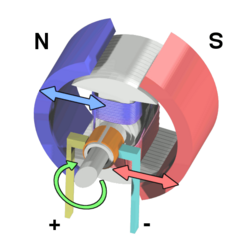
What is a DC Motor?
A DC motor converts direct current (DC) electrical energy into mechanical rotation. It works based on the interaction between magnetic fields generated in the stator and rotor windings.
Common types include:
Brushed DC Motor
Brushless Dc Motor (BLDC)
Coreless DC Motor
Each type is designed for different performance requirements such as torque, efficiency, and lifespan.
DC Motor Working Principle
The working principle of a DC motor is based on electromagnetic induction. When current passes through the armature winding, a magnetic field is generated. This interacts with the permanent magnet field, producing torque and causing rotation.
This simple structure makes DC motors easy to control and widely used in low-voltage applications such as 12V and 24V systems.
DC Motor Speed Control Methods
One of the most important features of DC motors is speed controllability.
PWM Speed Control
PWM (Pulse Width Modulation) is the most efficient method to control DC motor speed. By adjusting duty cycle, the average voltage applied to the motor changes, controlling speed precisely.
Voltage Control
Direct voltage variation can also control speed, but it is less efficient and causes heat loss.
Closed-loop Control with Encoder
Advanced systems use encoders to maintain stable speed under load changes, widely used in robotics and CNC systems.
DC Motor Torque and Performance
DC motor torque is directly proportional to current. Higher load requires higher current, which increases torque output.
However, speed decreases when load increases due to back EMF effects.
Applications of DC Motors
Industrial automation systems
Robotics and AGV vehicles
Medical equipment
Automotive systems (window lifts, wipers)
Small household appliances
Why Choose Our DC Motor Solutions?
We provide customized DC motor solutions with different voltage ranges (6V, 12V, 24V), torque options, and gear reduction systems. Our motors are designed for high durability, stable speed control, and long service life.
FAQ About DC Motors
What is the difference between brushed and Brushless Dc Motors?
Brushed motors use mechanical brushes for commutation, while Brushless Motors use electronic controllers, offering higher efficiency and longer lifespan.
How to increase DC motor torque?
Torque can be increased using gear reduction systems or by increasing current input within rated limits.
What is PWM in DC motor control?
PWM is a method of controlling motor speed by switching voltage on and off rapidly to regulate average power.
Internal & External Resources
For more technical insights on DC motor control systems, refer to engineering resources such as PWM control theory and motor driver design guides.
Learn more about DC motor systems and industrial applications from electronics engineering references and control system studies.