


 English

A needle bearing is a type of roller bearing that uses long,thin cylindrical rollers to reduce friction between moving parts.Compared with traditional ball bearings,a needle bearing offers a larger contact surface,allowing it to support higher radial loads while maintaining a compact design.Because of this advantage,needle bearings are widely used in automotive systems,industrial machinery,gearboxes,and compact power devices.
So,how does it work?A needle bearing works by placing multiple slender rollers between an inner and outer ring.When the shaft rotates,the rollers move smoothly and distribute the load evenly.This rolling motion greatly reduces friction compared with direct metal-to-metal contact,improving efficiency and extending service life.
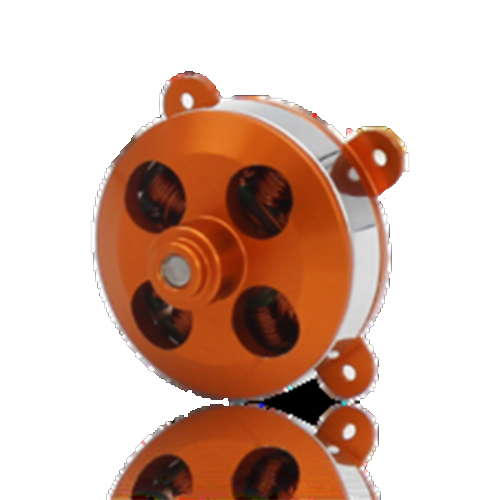
Needle bearings are especially useful in equipment where space is limited but load capacity is important.For example,they can be found in power tools,transmissions,pumps,and motion systems that may also include a brushed dc motor,dc brushed motor,or brush dc motor as the drive source.In many compact assemblies,a brushed motor or brushed electric motor relies on durable bearing support to ensure stable rotation and reduced wear.
In small electromechanical applications,such as devices using a permanent magnet brushed dc motor,miniature brushed dc motor,or small brushed dc motor,the correct bearing solution plays a key role in maintaining smooth performance.Needle bearings help reduce vibration,improve load handling,and increase reliability in these systems.
In summary,a needle bearing is a compact and efficient component designed to support rotating motion under high load conditions.By reducing friction and improving mechanical stability,it becomes an essential part in many machines and motor-driven systems.