


 English

When choosing a Derma Roller, one of the most important factors to consider is needle length. The right size determines how deeply the device penetrates the skin, what concerns it can treat, and how often you can safely use it. If you’ve been wondering how long should the needles be on a derma roller, this comprehensive guide will walk you through everything you need to know — from needle sizes and skin goals to safety guidelines and usage frequency.
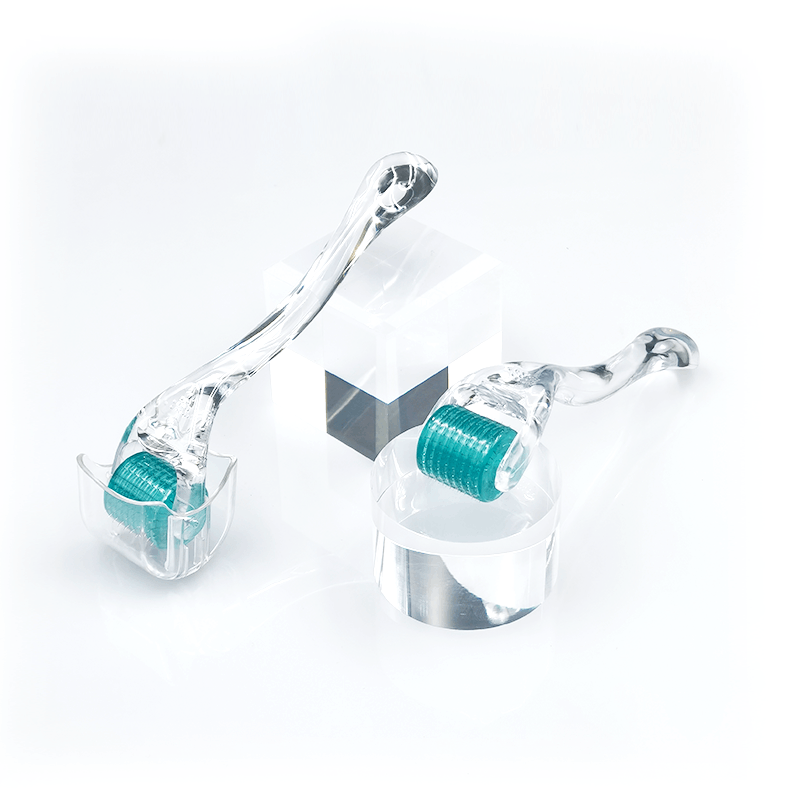
Understanding Derma Roller Needle Lengths
Derma rollers, also known as micro needle rollers, typically come in needle lengths ranging from 0.2mm to 2.5mm. Each length serves a different purpose:
0.2mm – 0.3mm
Enhances skincare product absorption
Improves surface-level skin texture
Suitable for beginners
Minimal downtime
This size does not significantly stimulate collagen production but improves topical penetration.
0.5mm
Stimulates collagen production
Reduces mild acne scars
Improves fine lines
Suitable for home use
This is one of the most popular sizes for at-home treatments.
0.75mm – 1.0mm
Targets moderate acne scars
Reduces deeper wrinkles
Improves skin firmness
At this level, professional supervision is recommended for safety.
1.5mm – 2.5mm
Treats deep acne scars
Improves stretch marks
Targets surgical scars
These lengths should generally be used by licensed professionals.
How Often Can You Use a Micro Needle Roller?
Another common question is: how often can you use a micro needle roller?
Frequency depends heavily on needle length:
| Needle Length | Recommended Frequency |
|---|---|
| 0.2–0.3mm | 2–3 times per week |
| 0.5mm | Every 2–3 weeks |
| 1.0mm | Every 4–6 weeks |
| 1.5mm+ | Every 6–8 weeks (professional use) |
The skin requires adequate healing time to regenerate collagen. Overuse can cause irritation, inflammation, or skin damage.
Choosing the Right Needle Length for Your Skin Goals
For Product Absorption
Choose 0.25mm needles. These create microchannels that enhance serum and essence penetration.
For Anti-Aging
A 0.5mm–1.0mm roller helps stimulate collagen and elastin production.
For Acne Scars
Use 0.75mm–1.5mm, depending on scar depth. Professional consultation is highly recommended.
For Stretch Marks
A 1.5mm–2.0mm roller is typically required for thicker skin areas.
Safety Guidelines for Derma Rolling
Always disinfect the roller before and after use.
Avoid active acne or infected skin.
Use sunscreen after treatment.
Never share your device.
Replace the roller after 10–15 uses.
Understanding Needle Rollers in Industrial Applications
Interestingly, while “needle rollers” in skincare refer to micro-needling devices, the term also appears frequently in mechanical engineering — especially in relation to bearing roller needle systems and precision motion control components.
Let’s briefly explore this distinction to clarify terminology and improve your understanding of related industrial keywords.
What Is a Bearing Roller Needle?
A bearing roller needle is a cylindrical rolling element used in mechanical assemblies to reduce friction between rotating components. Unlike spherical balls, needle rollers are long and thin, offering a larger contact surface.
These are widely used in:
Automotive transmissions
Industrial machinery
Gearboxes
Power tools
Types of Needle Roller Bearings
Caged Needle Roller Bearing
A caged needle roller bearing uses a cage to separate and guide the needle rollers, ensuring proper spacing and reducing friction. It allows higher speeds and controlled lubrication.
Full Complement Needle Bearing
A full complement needle bearing contains the maximum number of rollers without a cage. This design provides higher load capacity but lower speed tolerance.
Similarly, a full complement needle roller bearing offers enhanced radial load support due to increased rolling elements.
Combined Needle Roller Bearings
Combined needle roller bearings integrate radial and thrust bearings into one unit. These are ideal when compactness and multi-directional load support are required.
Flat Needle Roller Bearing
A flat needle roller bearing is designed for applications with limited axial space. It provides excellent load distribution in thin-profile assemblies.
Miniature Needle Roller Bearings
Miniature needle roller bearings are used in small precision devices such as robotics, medical tools, and compact motors.
Use of Needle Roller Bearing in Industry
The use of needle roller bearing technology offers several benefits:
High load capacity
Reduced friction
Compact structure
Efficient rotation
Long service life
They are particularly valuable in applications requiring space-saving solutions and high radial strength.
Comparing Derma Roller Needles and Needle Roller Bearings
While both terms involve “needle rollers,” they serve completely different functions:
| Feature | Derma Roller | Needle Roller Bearing |
|---|---|---|
| Purpose | Skin rejuvenation | Mechanical load support |
| Material | Medical-grade stainless steel or titanium | Hardened alloy steel |
| Function | Collagen stimulation | Friction reduction |
| Application | Cosmetic skincare | Industrial machinery |
The similarity in terminology often leads to confusion, but their applications are entirely unrelated.
Final Thoughts: What Needle Length Is Best?
To summarize:
0.25mm – Best for product absorption
0.5mm – Ideal for beginners and mild anti-aging
1.0mm+ – For deeper skin concerns (professional guidance recommended)
If you are new to microneedling, start conservatively. Always prioritize skin safety and healing intervals when deciding how often can you use a micro needle roller.
Understanding the difference between cosmetic needle rollers and industrial needle roller bearings — including types such as caged needle roller bearing, combined needle roller bearings, and full complement needle bearing — ensures clarity when researching related topics.
Whether improving your skin or optimizing machinery performance, selecting the correct needle length or bearing type is essential for achieving the best results.