


 English

When selecting an electric motor for a new product or industrial application, one of the most important decisions is whether to use a Brushless Motor or a brushed motor. Both motor types can provide reliable rotational power, but their construction, control method, efficiency, maintenance requirements, and suitable applications are different.
Understanding the difference between a brushless motor and a brushed motor can help engineers and purchasing teams select the right motor for their equipment. For applications with specific size, speed, torque, voltage, or installation requirements, Customized motors can also provide a more suitable solution than standard products.
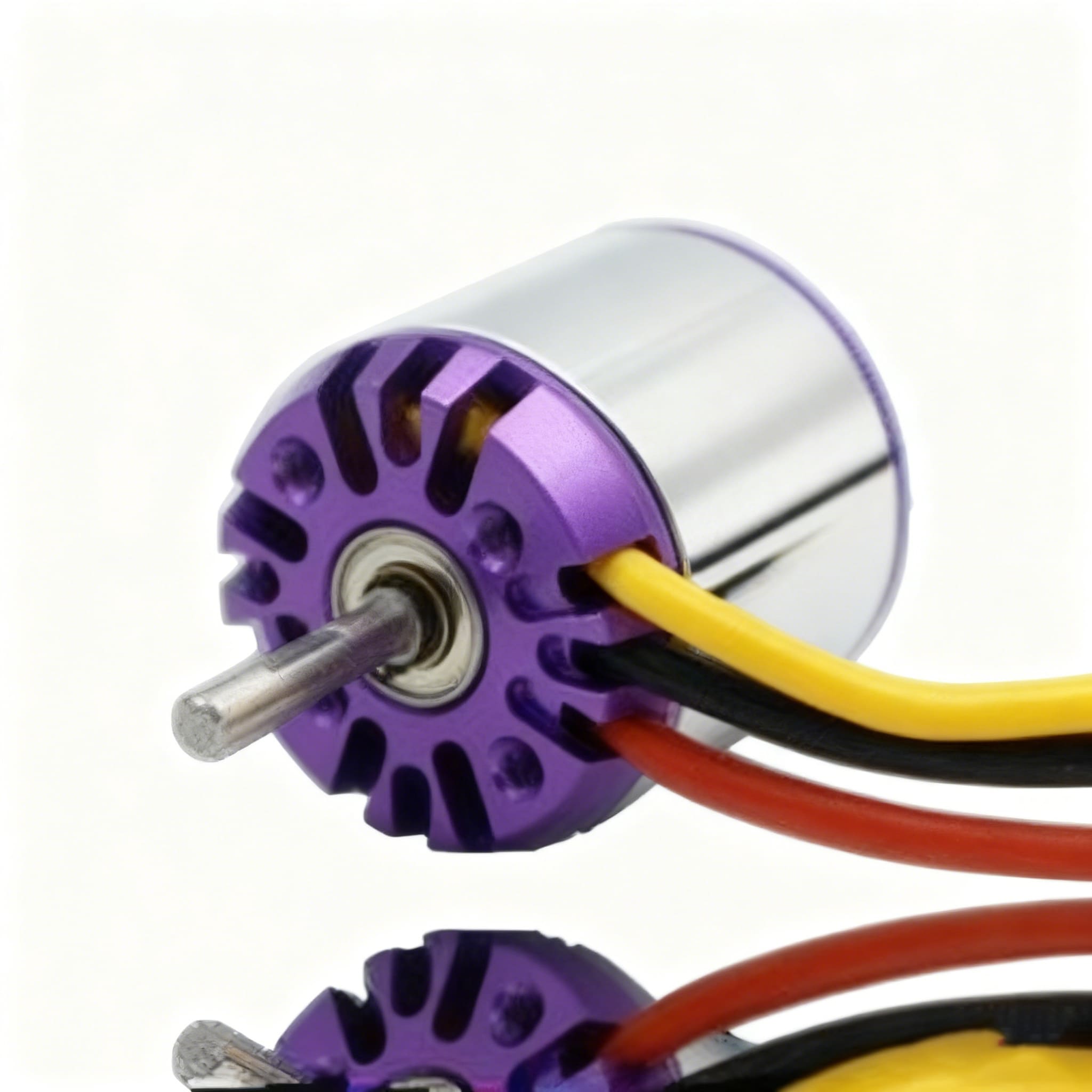
What Is the Difference Between a Brushless Motor and a Brushed Motor?
The main difference is how electrical current is switched to the motor windings.
A traditional brushed motor uses physical brushes and a commutator to transfer electrical current to the rotating armature. The mechanical contact between the brushes and commutator allows the motor to change the direction of current as the rotor turns.
A brushless motor, also known as a brushless DC motor or Bldc Motor, removes these mechanical components from the rotor. Instead, electronic control is used to switch the current through the stationary windings. Permanent magnets are generally located on the rotor, while the stator contains the windings.
This difference in construction has a direct impact on motor performance, maintenance, operating life, and application requirements.
Brushless Motor vs. Brushed Motor: Construction
The construction of a brushed DC motor is relatively straightforward. The motor includes a rotor, stator, brushes, and commutator. As the rotor rotates, the brushes maintain physical contact with the commutator.
A brushless DC electric motor uses electronic commutation instead. Since there are no brushes rubbing against a commutator, the motor eliminates one of the main sources of mechanical wear found in brushed designs.
This makes the internal construction of brushless motors particularly useful for applications where long operating periods and reduced routine maintenance are important.
Brushless vs. Brushed Motor: Efficiency
Efficiency is an important consideration when comparing a brushless motor with a brushed DC motor.
Because a brushless motor does not rely on physical brushes and commutators for electrical switching, it can reduce losses associated with mechanical contact. Electronic commutation can also provide precise control of motor operation when combined with an appropriate controller.
For equipment that operates continuously or requires controlled speed and torque, a bldc motor can therefore be an attractive option.
However, actual motor efficiency depends on many factors, including motor size, winding design, operating speed, load, controller, voltage, and application conditions. Motor selection should therefore be based on the complete operating requirement rather than motor type alone.
Brushless vs. Brushed Motor: Maintenance and Service Life
One of the clearest differences between brushless and brushed motors is maintenance.
Brushes in a traditional motor gradually wear because they remain in physical contact with the commutator. Depending on operating conditions, the brushes may eventually need to be inspected or replaced.
A brushless motor does not require brush replacement because it uses electronic commutation. This can reduce maintenance requirements and make brushless motors suitable for equipment where access for servicing is difficult.
Reduced mechanical wear can also contribute to a longer operating life under suitable conditions. Nevertheless, bearings, insulation, electronics, and other motor components can still experience wear or failure, so correct design and operating conditions remain important.
Speed and Torque Control
Both brushed and brushless motors can be used in variable-speed applications, but the control methods are different.
A brushed motor can be controlled relatively simply by adjusting the applied voltage or using an appropriate motor controller. This simplicity can be useful for applications where advanced control is not required.
A brushless motor requires electronic commutation and a suitable controller. Depending on the motor and control system, this allows engineers to achieve accurate speed control, efficient operation, and controlled torque characteristics.
For applications requiring precise motor behavior, the motor and controller should be designed as a complete system rather than selected independently.
Noise and Operating Environment
The mechanical contact between brushes and a commutator can produce friction and electrical arcing during operation. For some applications, this can affect noise, electromagnetic characteristics, and the suitability of the motor for certain operating environments.
Brushless motors eliminate this mechanical commutation system. This can provide smoother operation and make them suitable for applications where reduced mechanical wear and controlled motor performance are important.
However, overall system noise does not depend on motor construction alone. Bearings, load conditions, mounting structure, controller operation, and mechanical resonance can also influence the final noise level.
When Should You Choose a Brushless Motor?
A brushless motor can be considered when an application requires a combination of long operating periods, reduced brush-related maintenance, efficient operation, and controllable speed or torque.
Typical considerations include:
Long operating cycles
Limited access for maintenance
Variable-speed operation
Compact equipment designs
High operating efficiency requirements
Precise speed or torque control
Applications requiring reduced mechanical wear
These requirements can be found across automation equipment, pumps, fans, medical equipment, power tools, appliances, automotive systems, and other electromechanical products.
When Is a Brushed Motor Still a Good Choice?
A brushed motor should not automatically be considered an outdated solution. Its relatively simple construction and straightforward control can still make it appropriate for certain products.
For applications with lower operating requirements, limited duty cycles, or cost-sensitive designs, a brushed motor may provide a practical solution. The appropriate choice depends on the required performance, expected service life, control system, operating environment, and total cost of the product.
Why Customized Motors Can Be Better for Specialized Applications
Standard motors may not always match the mechanical and electrical requirements of a specific product. Engineers may need a particular motor diameter, shaft configuration, winding specification, voltage, speed range, torque output, mounting structure, or connector arrangement.
In these situations, customized motors can be developed around the requirements of the final equipment rather than forcing the product design to accommodate an existing motor.
For example, a customized BLDC motor can be designed with application-specific requirements such as:
Rated voltage and current
Rated and peak torque
Operating speed
Motor dimensions
Shaft size and configuration
Mounting structure
Winding characteristics
Sensor or feedback requirements
Connector configuration
This approach can be particularly useful when standard brushless motors cannot provide the required combination of performance and mechanical compatibility.
How to Select the Right Motor for a Custom Project
Before selecting a brushless or brushed motor, engineers should define the actual operating conditions of the application. Important specifications include required torque, speed, voltage, duty cycle, available installation space, ambient temperature, and control requirements.
It is also important to consider how the motor will interact with the rest of the system. Gearboxes, controllers, sensors, power supplies, and mechanical loads can all affect the final motor requirements.
For a custom motor project, providing detailed technical information at the beginning of the development process can help the manufacturer evaluate the appropriate motor structure and configuration.
Brushless Motor vs. Brushed Motor: Which One Should You Choose?
There is no single motor type that is best for every application.
| Feature | Brushless Motor | Brushed Motor |
|---|---|---|
| Commutation | Electronic | Mechanical |
| Brushes | No | Yes |
| Maintenance | Generally lower brush-related maintenance | Brushes require periodic attention |
| Control | Requires electronic control | Generally simpler |
| Typical advantage | Efficiency, controllability, reduced mechanical wear | Simple construction and control |
The final decision should be based on the specific application rather than simply choosing the newest or most advanced technology. For demanding applications, a properly designed brushless motor can provide significant advantages. For simpler or cost-sensitive products, a brushed motor may still be appropriate.
Conclusion
The main difference between a brushless motor and a brushed motor is their method of electrical commutation. Brushless motors use electronic switching instead of physical brushes and commutators, which can provide advantages in efficiency, maintenance, controllability, and mechanical wear.
Brushed motors remain useful for applications where simple construction, straightforward control, and cost are important considerations.
For specialized equipment, customized motors can provide another option by allowing the motor's electrical and mechanical characteristics to be matched to the final application. Selecting the right motor therefore requires an understanding of the equipment's performance requirements, operating conditions, and long-term objectives.
```